
Retail Space Intelligence · Est. 2019

We see what
the market
walks past.

Foot traffic geometry. Anchor tenant gravity. Lease structure arbitrage. We read city blocks to place capital exactly where retail still thrives.

Scroll

0+

Assets Evaluated

0.0x

Avg Equity Multiple

$0.0B

Capital Influenced

0%

Occupancy at Exit

0 mo

Avg Time to Reposition

Site Selection Methodology

Walk the studio.
Every zone earns its label.

RS-PLAN-2026 · SITE SELECTION FRAMEWORK
TRAFFIC MODELINGZone 01TENANT SYNERGYZone 02LEASE STRUCTURE ANALYSISZone 03FULL CORRIDOR COVERAGE
Structural Wall
Zone Boundary
Active Zone
Zone 01——

Traffic Modeling

We layer foot-traffic heat maps drawn from anonymized device pings against historical pedestrian counts to identify corridors with durable daily volume — not just weekend spikes.

Data Points / Block

340K+

Temporal Depth

5 Years

Zone 02——

Tenant Synergy Mapping

Anchor tenant gravity radiates outward in measurable arcs. We model co-tenancy relationships — which retail categories cluster profitably, which ones cannibalize — before any capital moves.

Tenant Categories Tracked

180+

Co-tenancy Models

2,400+

Zone 03——

Lease Structure Analysis

Below-market leases, percentage rent clauses, co-tenancy kick-outs: the fine print determines whether a corridor compounds or collapses. We read every stack before pricing the upside.

Lease Structures Reviewed

900+

Avg Upside Identified

18%

Portfolio Elevations

Before the market repriced.
We had already read the block.

Strip Center · 48,000 SF

Westlake Strip Center — Austin, TX

Case Study 01
Identified 14 months before the grocer signed LOI.
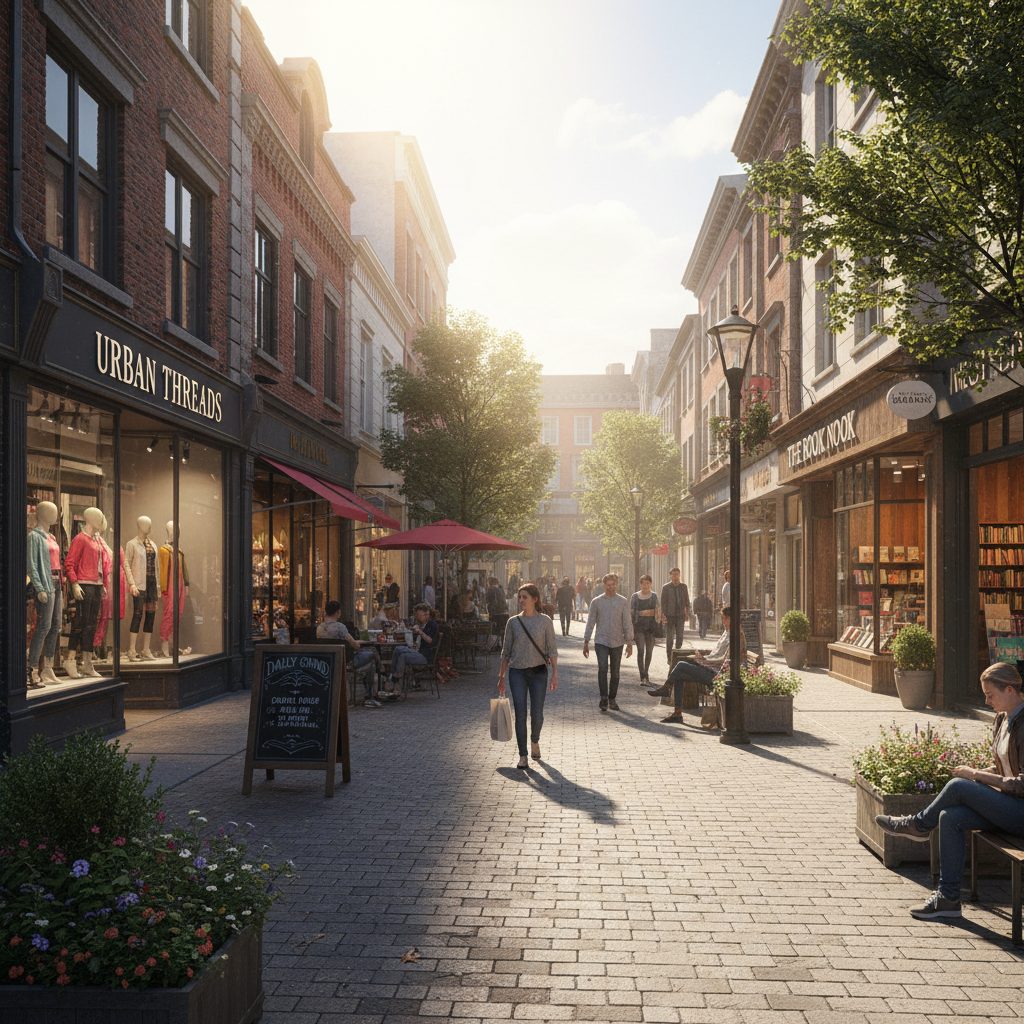
Westlake Strip Center — Austin, TX before repositioning — retail facade
Pre-Repositioning

Anchor vacancy at 34%. Three national tenants on below-market leases with co-tenancy kick-out clauses. Pedestrian volume: 2,100/day.

Westlake Strip Center — Austin, TX after repositioning — transformed tenant lineup
Post-Repositioning

Grocer-anchored with two fitness tenants and a medical office pad. Leases repriced 22% above market. Pedestrian volume: 8,400/day.

IRR

23.4%

Unlevered

NOI Growth

+61%

36-month hold

Cap Rate Δ

−85bps

At exit

Identified 14 months before the grocer signed LOI.

High Street · 12,200 SF

Harbor Row Corridor — Baltimore, MD

Case Study 02
Co-tenancy risk eliminated before any capital was deployed.

Harbor Row Corridor — Baltimore, MD before repositioning — retail facade
Inherited Portfolio

Family office holding with three month-to-month tenants and one dark anchor. Effective GLA utilized: 58%. Last appraised in 2019.

Harbor Row Corridor — Baltimore, MD after repositioning — transformed tenant lineup
After Tenant Restructure

F&B-led lineup with a regional grocery concept and two service tenants. 100% occupancy. NNN lease structures throughout.

Value Uplift

+$4.2M

On $6.8M basis

Occupancy

100%

NNN leases

Timeline

11 mo

Lease-up

Co-tenancy risk eliminated before any capital was deployed.
Strategy Session

Book a Site Review

Thirty minutes. We review your asset, share what the data says, and tell you plainly whether the geometry works.

1
2
3

What type of retail asset are you evaluating?

Research · Q1 2026

RetailSight
Corridor Index

Fifty retail corridors. Vacancy trajectories, anchor tenant shifts, lease rate momentum, and pedestrian density scores — ranked and annotated. The index we use internally before every capital placement.

Top 12 undervalued neighborhood centers by MSA

Tenant mix shift signals — 6-month leading indicators

Lease structure red flags by corridor type

Pedestrian density vs. asking rent scatter analysis

RetailSight Index

Q1 2026 · 50 Corridors · 84 Pages

01
Corridor Performance Rankings
02
Vacancy Rate Heatmap
03
Anchor Tenant Gravity Analysis
04
Lease Structure Benchmarks
· · · Enter email to unlock · · ·

No pitch deck. No follow-up unless you ask.